

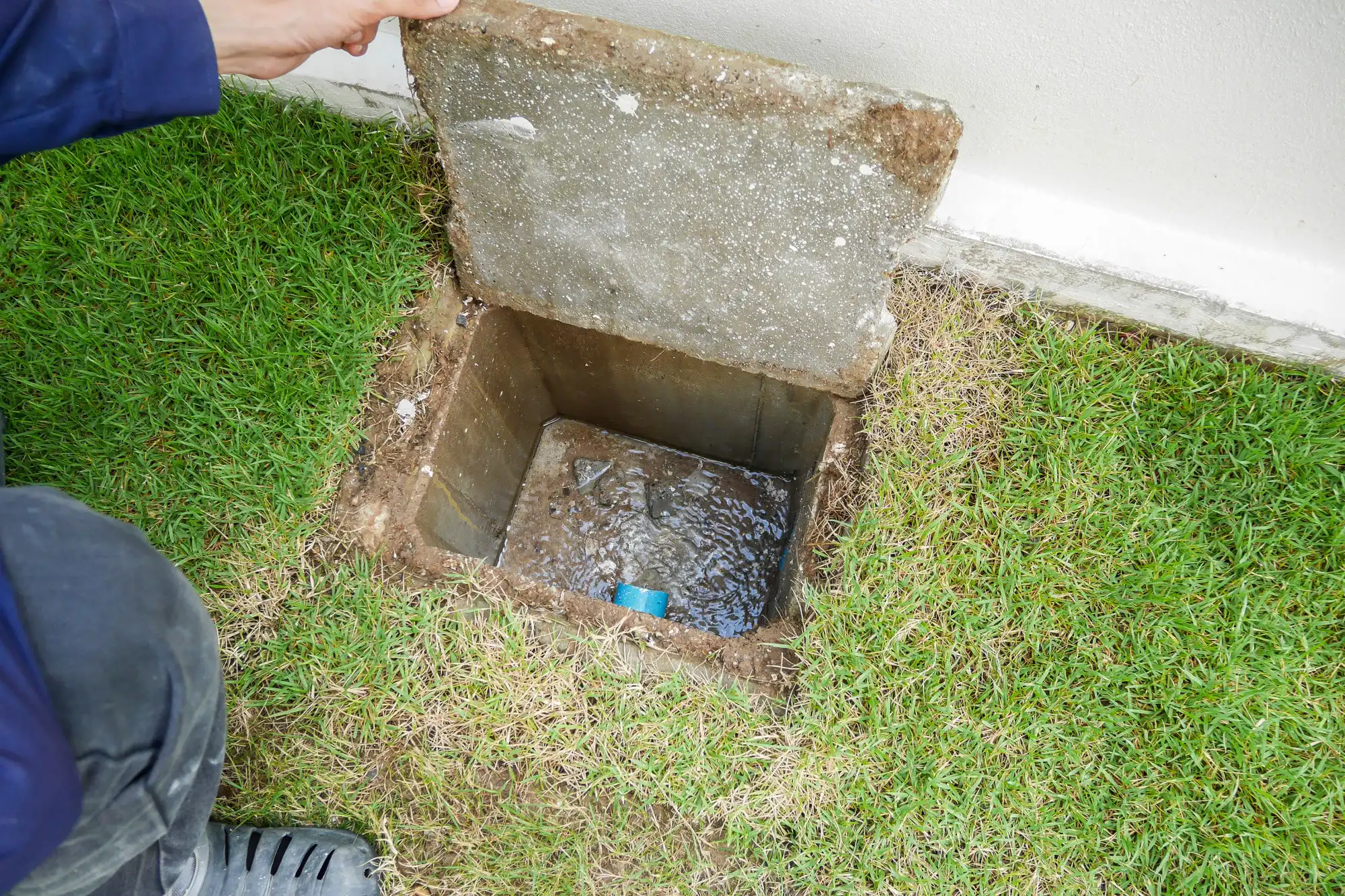
San Diego does not get the kind of rainfall that homeowners in the Midwest or Pacific Northwest deal with, but the storms we do get have shifted in the last decade. Atmospheric rivers now drop several inches of rain in 24 hours on a clay-soil county that drains slowly. Homes in low spots — Mission Valley, parts of Linda Vista, the canyons running through Allied Gardens and Del Cerro — face flooding risk that did not exist when the house was built.
A sump pump is the answer when a flooded basement, crawl space, or below-grade room is on the table. Here is how to spec, install, and maintain one in a San Diego home.
When you actually need a sump pump
Sump pumps are not standard equipment in most San Diego homes. You need one if any of the following apply: the home has a basement or partial basement that sits below grade; the home has a crawl space that has flooded in a previous storm; the property sits at the bottom of a slope where storm runoff concentrates; the house has a below-grade utility room or wine cellar; or you have a backwater valve on the sewer lateral that closes during heavy flow and traps household drains until the storm passes.
The National Weather Service flood-safety guide notes that even six inches of moving water can cause significant interior damage. A sump pump is the difference between a wet floor and a structural drying project.
Sizing the pump correctly
Pump capacity is measured in gallons per hour at a given lift height. For most San Diego homes, a 1/3 HP pump moving 2,000-3,000 GPH at 10 feet of lift is appropriate. Larger homes, deeper pits, or homes with high inflow rates may need 1/2 or 3/4 HP units. Undersized pumps cannot keep up with peak inflow during the worst hour of a storm, which is the only time the pump actually matters.
If your pump runs continuously during a storm and the water level still rises, the pump is undersized for the job. The fix is either a larger primary pump or a dual-pump configuration with a backup that kicks in during peak inflow.
The battery backup question
The biggest storms knock out power. A primary pump that needs 120-volt AC stops working at the moment you need it most. Battery backup systems run on deep-cycle 12-volt batteries and provide several hours of pumping during a power outage. For homes with real flood exposure, battery backup is not optional.
Test the battery every six months. Replace the battery every 3-5 years even if it tests good — the capacity degrades faster than the test reveals.
Where the discharge goes
The discharge line from a sump pump has to terminate somewhere that drains away from the house and that does not violate code. Common solutions: daylight at a slope downhill from the house, into a dry well, or into a storm-drain inlet if the municipality allows. Never tie a sump pump discharge into the sanitary sewer — that is a code violation and the wastewater treatment plant cannot handle the load.
The discharge line needs a check valve to prevent water from flowing back into the pit when the pump shuts off, and ideally a freeze-resistant routing for the inland valleys.
Annual maintenance
Once a year, before rainy season: fill the sump pit with a garden hose until the float triggers the pump. Verify the pump cycles on and off normally. Verify the discharge is flowing freely and the check valve is not stuck open. Listen for any unusual noise. Confirm the pit is free of debris that could clog the intake screen.
If your pump is older than 7 years, replace it preventively. Primary pump failures during storms account for the majority of flood claims we see, and the cost of a new pump is a small fraction of the cost of cleanup.
What happens after a sump-pump failure
If the pump fails and your basement floods, the next 48 hours are decisive. Water extraction has to start within hours, not the next day. Affected materials — drywall, carpet, insulation — have to be removed before mold colonizes. Documentation has to be thorough enough to support an insurance claim.
For larger losses, get a licensed public adjuster involved before the insurance company sends out their own. For related needs, we recommend public adjuster claim management service.
If your home does not have a sump but should
Retrofitting a sump pit into an existing basement or crawl space is a real project but a tractable one. The pit is core-drilled or cut into the slab, lined, and tied into the drain tile or perimeter drain system. Discharge is run to daylight. The whole install runs $2,000-5,000 for a typical residential application. If your home has flooded once, the math on installing a sump pit is overwhelmingly in favor of doing it now rather than after the second flood.
Your San Diego Sump Pump Specialists
At Drain Masters Plumbing, we install and service sump pumps, battery backups, and discharge systems across San Diego County — Chula Vista, La Mesa, El Cajon, Santee, Spring Valley, Lemon Grove, Lakeside, La Jolla, Del Mar, Carlsbad, Oceanside, Poway, and surrounding communities. If you have a home that has flooded before or sits in a high-runoff location, contact us before the next atmospheric river. Our plumbing services cover the full San Diego region year-round.