

Sewer smell in your yard is different from sewer smell inside your house. The indoor version is usually a dry trap or a bad wax ring — minor, contained, fixable in an afternoon. The outdoor version is almost always the side sewer line itself, and outdoor smell is the symptom that tells you a problem you cannot ignore has already started.
Here is what causes sewer smell outside, how serious each cause is, and what to expect when you call a plumber.
What you are smelling, and where it is coming from
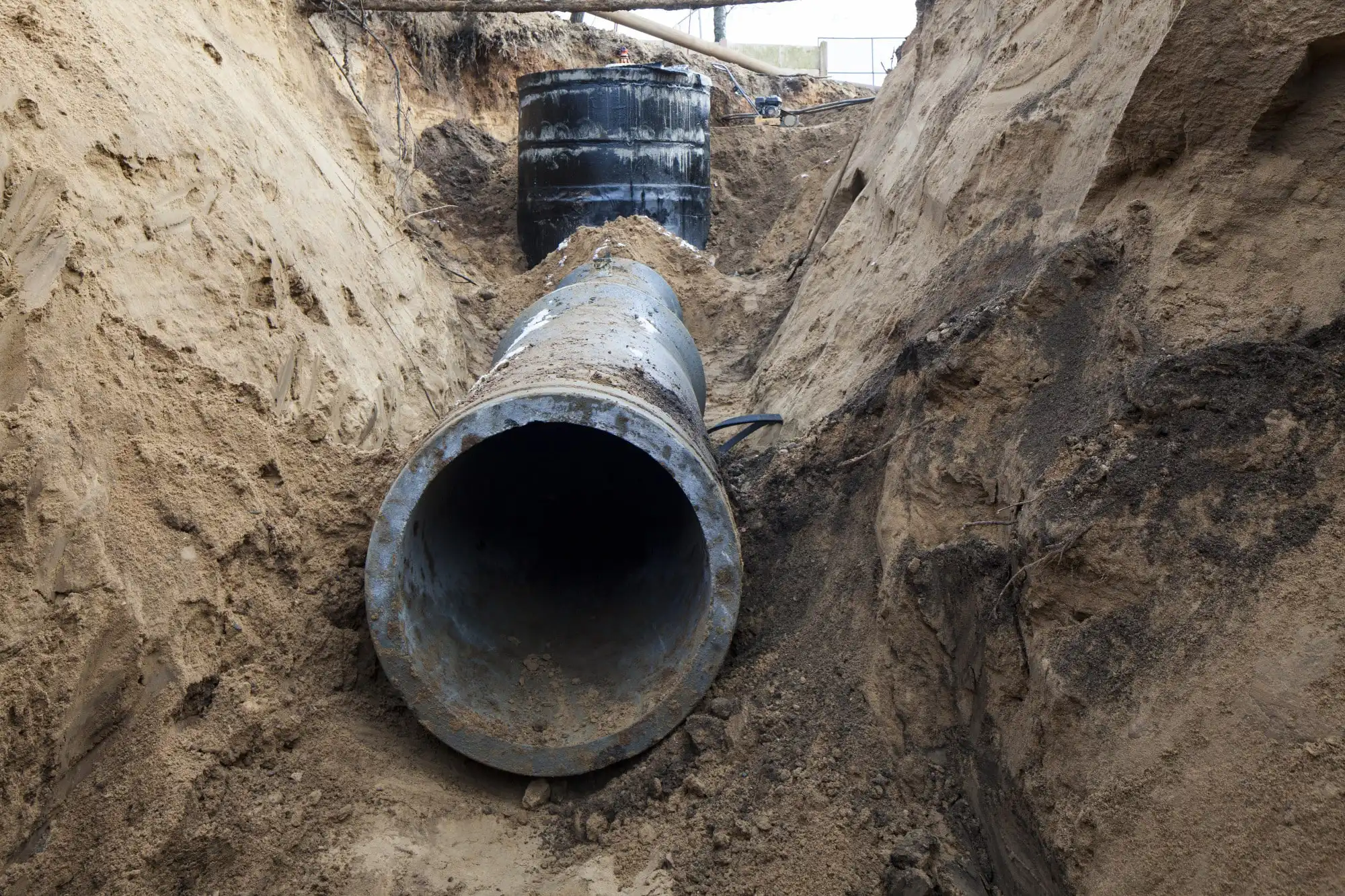
Outdoor sewer smell almost always means raw sewer gas is escaping from a buried pipe somewhere between your house and the city main. The pipe is either cracked, has a separated joint, has been infiltrated by tree roots that have torn the pipe wall, or has a partial blockage that is causing the pipe to back up under pressure and vent through any opening it can find.
You will usually notice the smell after rain (groundwater pushes air through the pipe defect) or when something flushes inside the house and the pressure spike forces gas out through the crack. The smell concentrates around the lateral run — typically along the side yard between the house and the street, or under a back patio if the line runs that way.
Root intrusion is the #1 cause in older San Diego neighborhoods
Tree roots seek water. A buried sewer line is the most reliable water source in an otherwise dry yard, and roots find it through hair-thin defects in the pipe — old clay joints, hairline cracks in cast iron, anything older than 30 years. Once a root enters, it grows inside the pipe until the pipe wall cracks open or the root mass dams the flow. From outside, the smell starts when sewer gas finds the path the roots created.
If you have mature trees within 25 feet of your sewer lateral and your home was built before 1990, roots are the most likely cause. Diagnosis is straightforward: a sewer camera through the cleanout shows the roots directly. The EPA’s overview of drain system design covers how root intrusion progresses and why it gets worse rather than better with time.
For homes with overgrown root systems on or near the sewer lateral, professional large-tree assessment and root-zone tree removal services can address the source before another lateral fails — particularly valuable when the same trees are within 25 feet of multiple buried utility lines.
Cracked or separated pipe joints
Older San Diego homes were built with clay tile sewer pipe joined with mortar. The mortar fails over time. Joints separate. Soil settles around the failure, soil enters the pipe, and the pipe partially collapses. The smell coming out of the soil above the failure is your first warning.
Cast iron is no better. After 50 years it corrodes from the bottom up, the bottom of the pipe disappears, soil enters, and the pipe ovalizes. Either failure mode requires repair before the line collapses completely.
What a sewer camera inspection finds
A licensed plumber pushes a self-leveling camera through the cleanout (or through the main vent if there is no cleanout). The camera shows the pipe interior on a monitor, marks distances with a locator, and records video. You see the defect directly. You also see whether the rest of the line is in usable condition or whether the whole lateral needs replacement.
The inspection typically runs $200-400 and the video is yours to keep. If you are buying a home, ask for the camera inspection as a contingency.
Repair options
Spot repair. For a single break or joint failure, the plumber digs down to the defect, cuts out the bad section, and replaces it with new pipe. $1,500-3,500 depending on depth, access, and what is above the line (driveway, patio, mature landscaping).
Pipe lining (trenchless). A resin-saturated felt sleeve is pulled through the existing pipe, inflated, and cured in place. The new pipe-within-a-pipe seals all joints and cracks. $80-250 per linear foot. Best for long runs where digging would tear up driveways or hardscape.
Full replacement (open trench). Excavate the full lateral, install new PVC pipe, backfill, restore the surface. Most expensive option but appropriate for completely collapsed lines or lines with multiple defects.
Damage cleanup after the repair
If the sewer line failure caused backups inside the house — a basement bathroom that overflowed, a tub that backed up during heavy rain — you have a biohazard cleanup on top of the plumbing repair. Sewer contamination requires more than mop-and-bleach; affected materials need to be removed and the area needs proper disinfection and structural drying.
What to do before the plumber arrives
Map the suspected smell zone. Stake the perimeter if the smell is concentrated, photograph any wet or sunken spots in the yard, and note when the smell is strongest. If the smell coincides with backups inside the house, stop flushing and using high-volume drains until the plumber arrives. The lateral may already be partially collapsed.
Your San Diego Sewer Line Specialists
At Drain Masters Plumbing, we run sewer cameras and execute sewer line repair and replacement throughout San Diego County — Chula Vista, La Mesa, El Cajon, Santee, Spring Valley, Lemon Grove, Lakeside, La Jolla, Del Mar, Carlsbad, Oceanside, Poway, and surrounding communities. If you smell sewer in your yard, do not wait for the next backup. Contact us for a camera inspection. Our sewer services cover the full San Diego region 24/7.